Prep decides more than product
Makeup sits on whatever is underneath it. Dry patches lift, oily areas break things down faster, and skin that has just been exfoliated is often too fresh to hold anything evenly. Moisturiser that has properly absorbed, given a few minutes rather than a few seconds, gives the most reliable surface to work on.
Rushing this is the most common reason a look that seemed fine at nine has slid by lunchtime. Time spent letting products settle is not wasted time.
Thin layers beat thick ones
One heavy pass of foundation moves and creases far more readily than two thin ones built up where you actually need coverage. Most faces do not need the same amount everywhere. Building in the middle of the face and leaving the edges lighter tends to look better and last longer at the same time.
Powder where it matters, not everywhere
Powder is useful for controlling shine and locking things down, but blanket powdering flattens the skin and can look heavier as the day goes on. Targeting the areas that actually move or get oily, and leaving the rest, keeps the finish looking like skin while still giving you the hold.
Time spent letting products settle is not wasted time.
Cream first, powder over
Layering cream products under powder ones generally outlasts either alone. A cream blush with a powder blush pressed lightly over the top holds colour far longer than powder on its own, which has a habit of disappearing by the time anyone gets to dinner.
Setting spray is not a rescue
A setting spray helps knit layers together and take away the powdery look. What it will not do is fix an application that was too heavy, applied on unprepared skin, or built in the wrong order. It is a finishing step, not an insurance policy.
Plan for touch-ups you will actually do
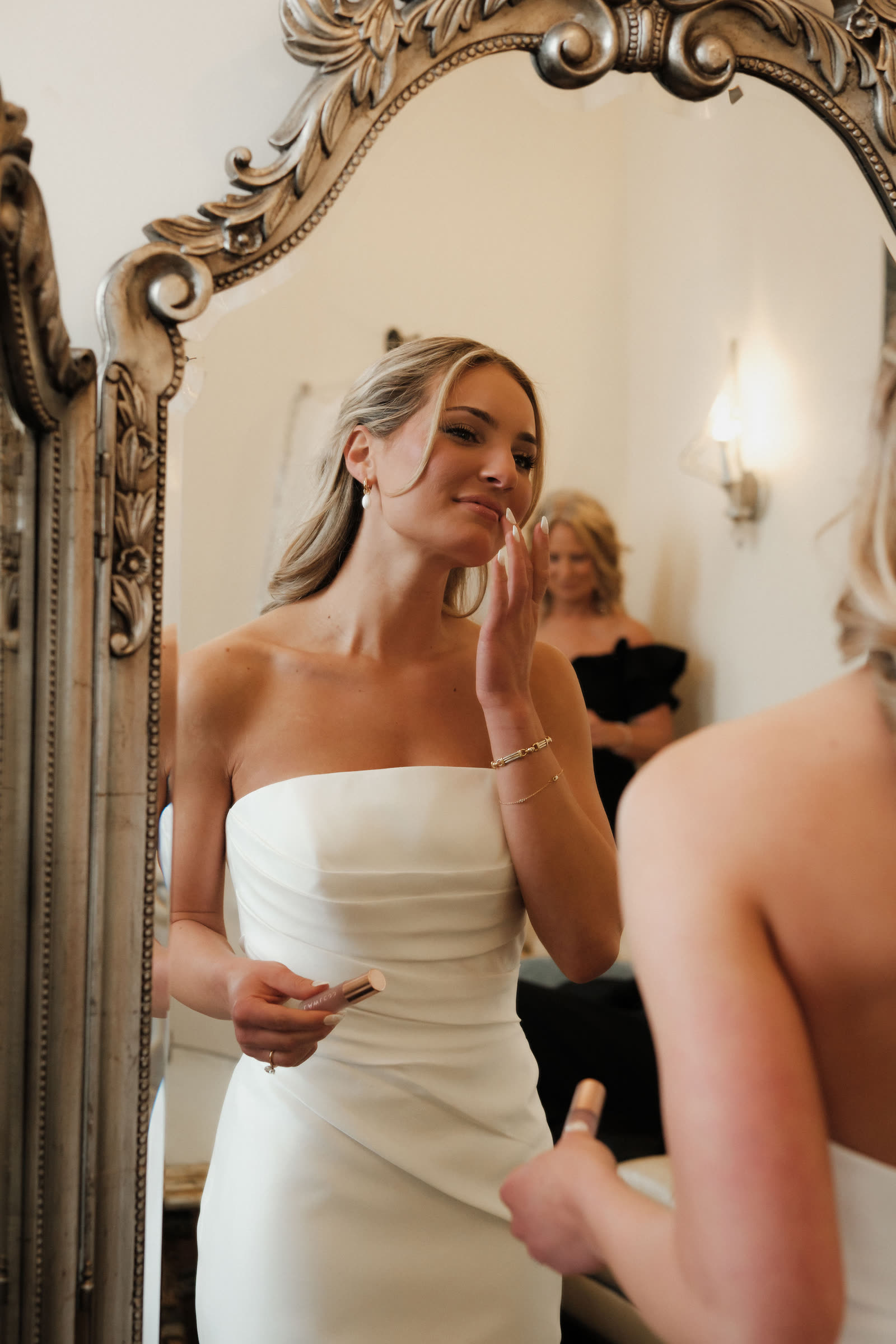
The realistic touch-up kit is small. Blotting papers, the lip product you are wearing, and a little powder for the centre of the face will handle almost everything. A large bag of products you will never open in a bathroom mid-event is not a plan.
On a wedding day specifically
Weddings compress everything. You are up early, photographed constantly, usually warm, and frequently emotional. That combination is harder on makeup than an ordinary long day, which is why the prep and the layering matter more rather than less.
If you are getting married, a trial is a full run-through of the look beforehand and can be worked into your bridal package, so you find out how it wears before it counts. See wedding and event makeup, or if you would rather learn the technique yourself, a makeup lesson covers exactly this.