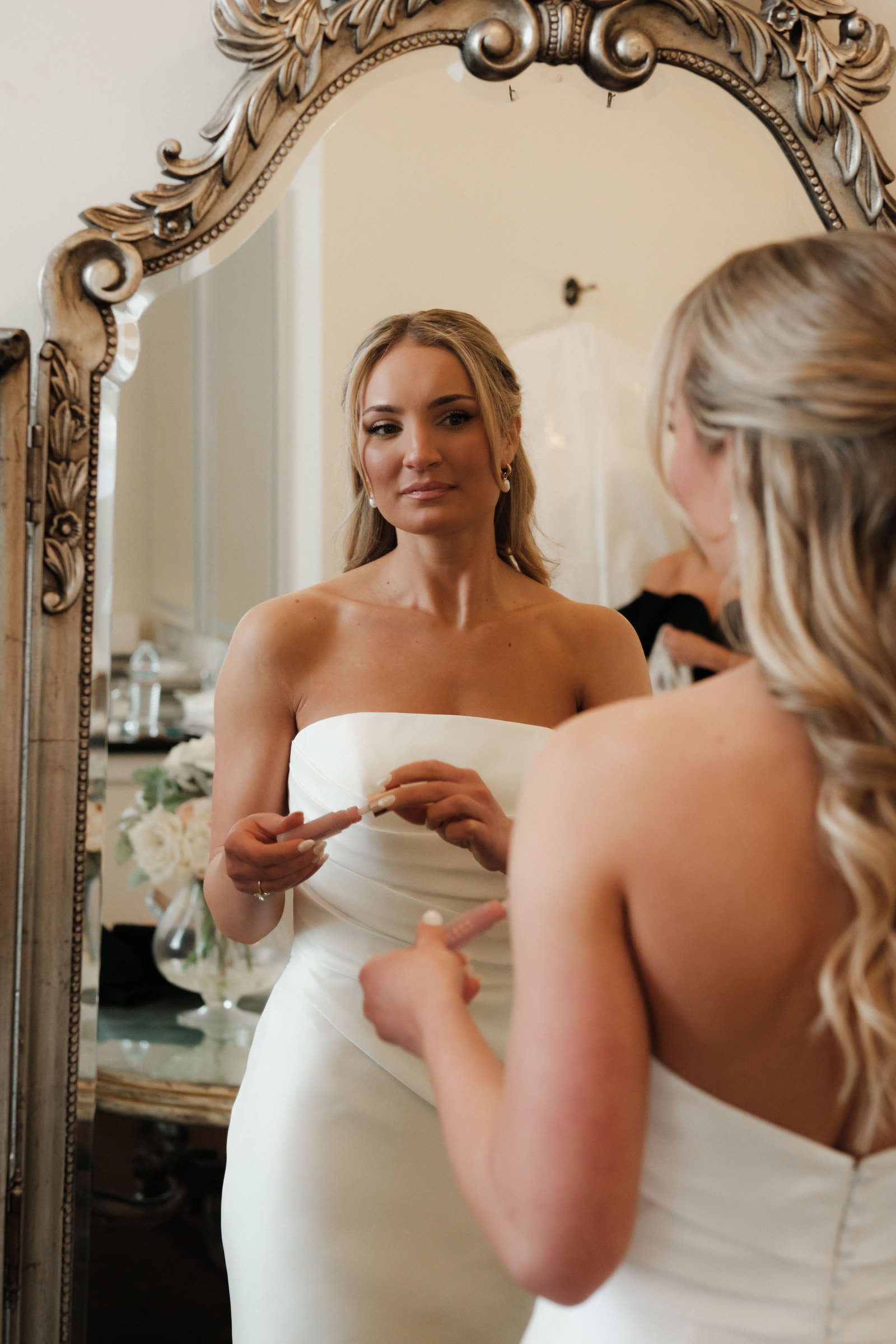
What people mean by natural
Natural rarely means less makeup. More often it means makeup that reads as skin. A face can have foundation, concealer, blush, liner and lashes on it and still look natural, as long as the finish looks like skin rather than a layer sitting on top of it. The work goes into blending and into choosing textures that behave like the face underneath, not into leaving things out.
This matters because a lot of brides ask for natural, get given almost nothing, and then feel washed out in their own photographs. Cameras are unkind to bare faces under bright light. The goal is presence without heaviness.
Natural rarely means less makeup. More often it means makeup that reads as skin.
It starts with skin, not product
The single biggest difference between a soft look that holds and one that separates by dinner is what happens before any makeup goes on. Skin that is properly hydrated takes product evenly. Skin that is dry or freshly exfoliated grabs it in patches, and no amount of technique fixes that afterwards.
In the weeks before a wedding, the useful thing is consistency rather than novelty. Keep to what your skin already tolerates. The month before your wedding is the worst possible time to introduce a new active ingredient, book a first-time facial, or try a treatment someone recommended in a group chat. If you want to change something, change it early enough that you know how your skin responds.
Where to put the colour
A soft look usually needs warmth somewhere, or it flattens out. Blush across the cheeks and a little on the nose reads as a face that has been outside, rather than a face that has been painted. A soft wash on the eyes with definition close to the lash line gives shape without creating an obvious eye look. Lips somewhere near your own colour, a shade or two deeper, tend to survive a day of talking and eating better than anything with a hard edge.
What actually photographs well
Photographers work with light you cannot always predict, and flash in particular is unforgiving. Heavy powder can catch it and go flat or ashy. A skin-forward finish, with powder used only where it is needed, tends to hold up better across the range of light you will move through, from a bright getting-ready room to a dim reception.
It is also worth remembering how long the photographs last. A trend-led look dates quickly. Something closer to your own face tends not to.
Common things that go wrong
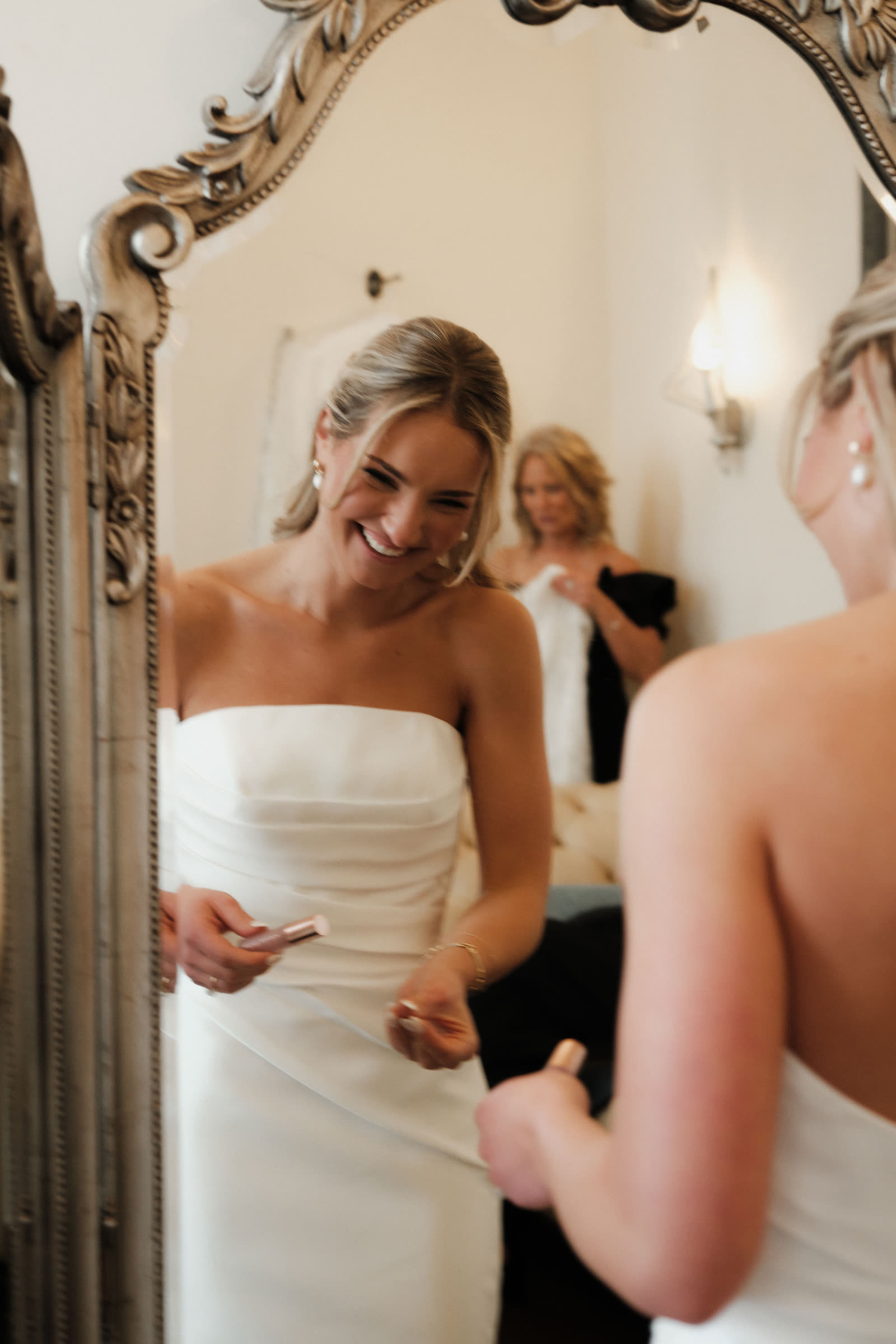
Going several shades lighter or darker than your neck. Trying a completely new look on the morning itself. Assuming that natural means skipping lashes entirely, when a light set often reads as nothing more than your own lashes on a good day. And leaving the whole question until the week of the wedding, when there is no time left to adjust anything.
If you want to see it first
A trial is a full run-through of your look before the day, and it can be worked into your bridal package. It is the difference between hoping the morning goes well and knowing what you are going to see in the mirror. If you would rather learn to do it yourself, a makeup lesson covers the same ground with you doing the applying.